Discovery of Crystalline Grains in Space Ice
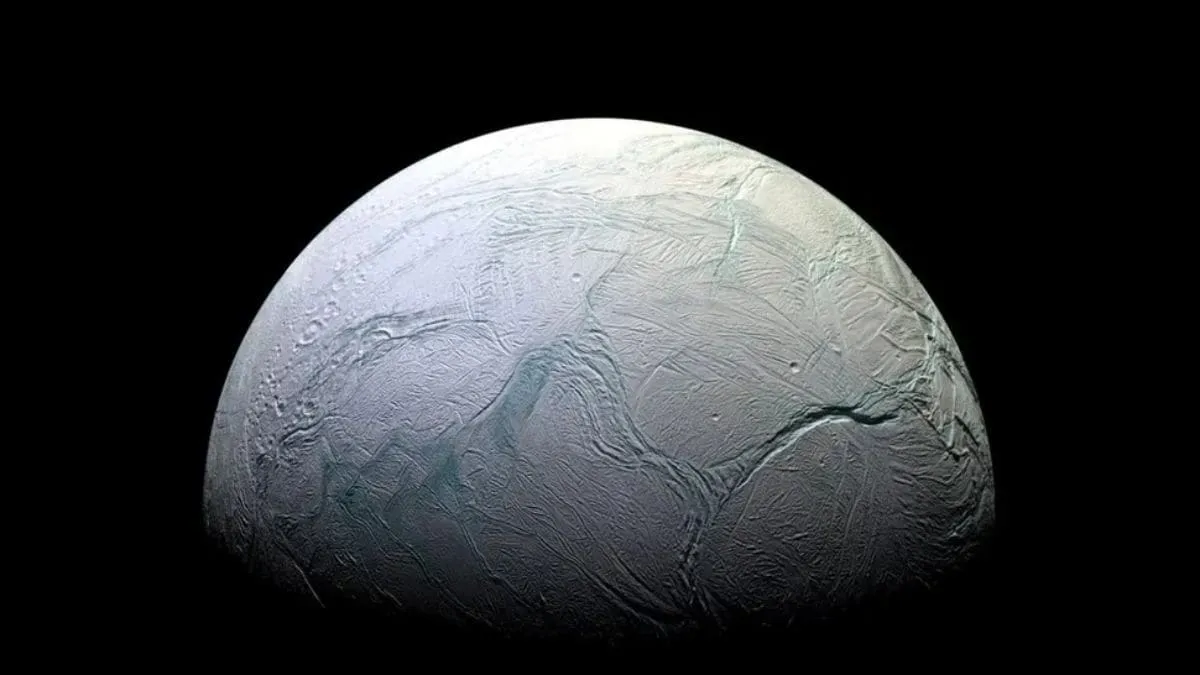
Many outer solar system bodies, including Jupiter’s icy moon Ganymede, are coated in water ice. On Earth, ice forms into a neat crystal lattice, but in the extreme cold of space, it was believed to be entirely amorphous. However, a recent study by scientists from University College London and Cambridge challenges this long-held notion.
The researchers conducted computer simulations and X-ray tests on cosmic “low-density” ice. Surprisingly, their findings revealed that the space ice actually contains tiny crystalline grains. Contrary to previous beliefs, about 20–25% of the ice exhibited crystal structures, debunking the idea that space ice is completely structureless.
Uncovering the Composition of Space Ice
The study detailed that computer simulations of space ice displayed the presence of nanocrystals. By cooling virtual water to –120 °C at various rates, researchers created model “ice cubes.” Depending on the speed of cooling, the simulated ice varied from fully amorphous to partly ordered. The structures with approximately 16–19% of the molecules in small crystal clusters best matched the published X-ray data for low-density ice. In another simulation, packing thousands of nanometer-sized ice grains together, followed by randomizing the remaining water molecules, resulted in ice that was about 25% crystalline, yet still producing the expected diffraction pattern.
Experimental Verification
In laboratory experiments, the team replicated low-density amorphous ice through vapor deposition and gentle compression. Upon slowly warming these samples to crystallize, the resulting ice exhibited a “memory” of its formation process.
The findings offer important insights into the atomic-level appearance of the most common form of ice in the Universe. This knowledge is crucial for understanding planet and galaxy formation models. Additionally, the discoveries have implications for theories surrounding the origins of life. Partly crystalline ice may have limited internal space to retain organic molecules, potentially impacting its efficacy as a carrier for amino acids or other prebiotic compounds. Nonetheless, the presence of fully amorphous ice pockets in cosmic dust grains and cometary ices suggests that organic ingredients could still be harbored in these disordered regions.